Why Can't I Swim in the Ocean in Cabo? What U.S. Expats Need to Know Before Moving
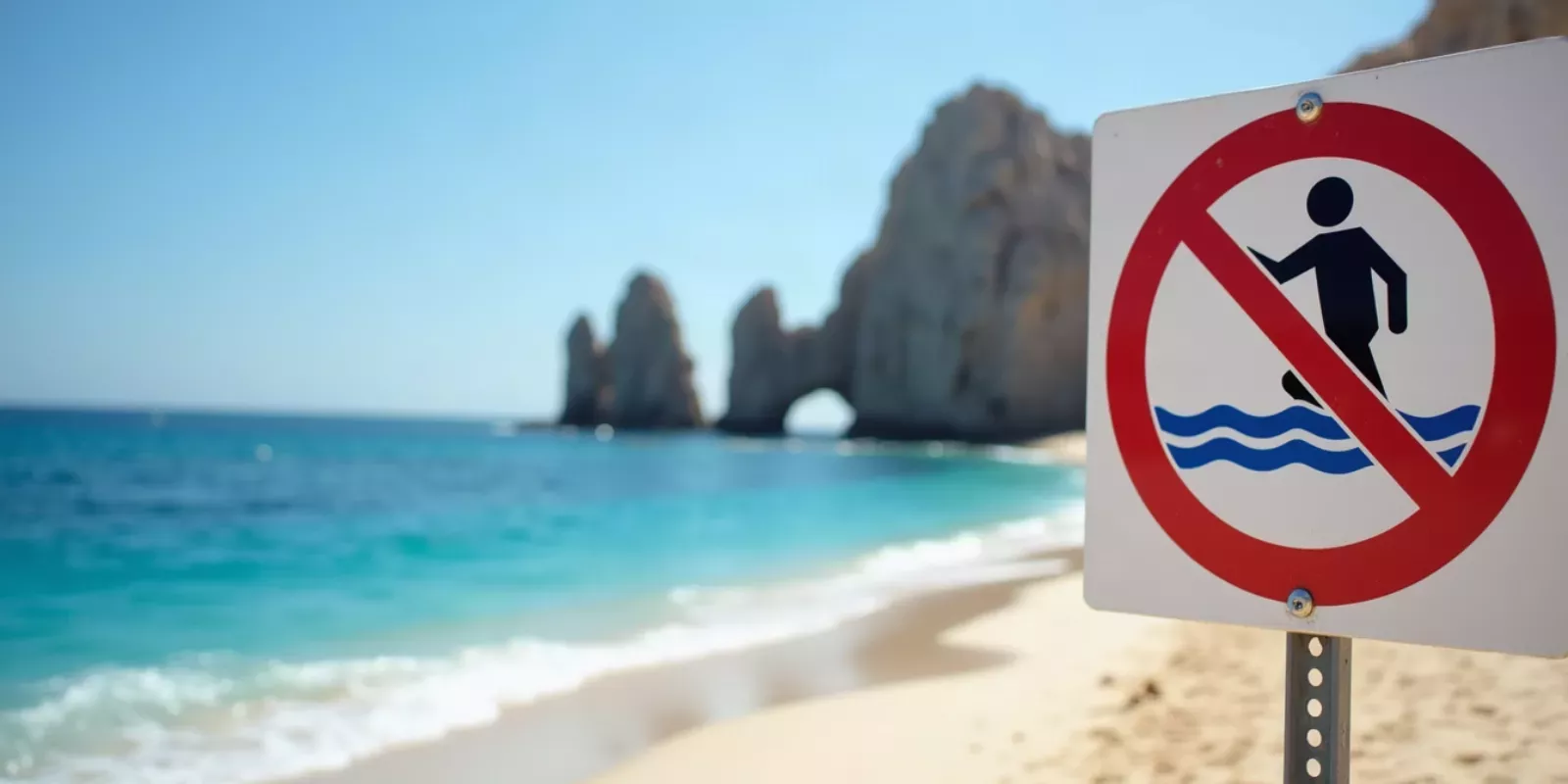
It's the question almost every new arrival asks after their first walk on the beach: "Wait, why can't I swim here?" The water looks perfect. The sand is empty. And right in front of you there's a sign that says danger, no swimming.
If you're relocating from California, Texas, or Arizona, this can be unsettling. You're planning a life by the ocean, maybe with kids, maybe for retirement, and suddenly you're not sure the ocean is something you can enjoy at all. The good news: you can swim in Los Cabos. You just need to know where, and why so many beaches here are off-limits. This is the part nobody tells you before you sign a lease.
Los Cabos sits at the southern tip of the Baja California Peninsula, right where the Pacific Ocean meets the Sea of Cortez. That meeting point is what makes the coastline so dramatic, and also what makes so much of it unsafe for swimming. The Pacific side takes the full force of open-ocean swells, while the Sea of Cortez side is generally calmer. But even on the calmer side, not every beach is safe.
That's why a beach can look beautiful and still be one you should never get into. In Cabo, the view from the sand tells you very little about what's happening under the water.
Rip currents are fast-moving channels of water that pull away from the shore. They can take even strong swimmers out in seconds, and from the beach they often look like the calmest part of the water.
On many beaches here, the ocean floor drops sharply just a few steps from the shoreline. One moment you're standing, the next you're not, and that sudden change in depth is also what creates the big, heavy waves that break right on the sand.
Waves in Cabo often break directly on the beach instead of farther out. They can knock you off your feet in water that's barely ankle-deep and pull you back with them. This is the one that catches people who "were just getting their feet wet."
Worried about beach safety for your family? Ask us on WhatsApp
You know the Pacific, and that's exactly why you might trust it too much here. Many beaches in Cabo break closer to shore and drop off faster than what you're used to. Your experience helps, but it doesn't replace knowing which beaches are actually swimmable.
If your beach days were on the Gulf Coast, you're probably used to gradual, shallow water where you can walk out a long way. Cabo is the opposite on many beaches: deep water right off the shore and waves that hit hard.
Many Arizonans know the Sea of Cortez from trips to Rocky Point, and assume Cabo will feel the same. Some beaches here are calm, but many are not. Don't assume the whole coastline works like the beach you're used to.
Before you go near the water, check the posted flags. Green means safe to swim. Yellow means use caution. Red or black means stay out. Conditions change with the swell and the season, so a beach that was calm last week can be dangerous today. Check every single time, even at beaches you know well.
Here's the part that should put your mind at ease: Los Cabos does have real, swimmable beaches. Google usually shows you the same four. What it doesn't show you is that there are more, some public and some inside communities, and that where you live decides which one becomes your everyday beach.
We put together a full guide on exactly that: What Part of Cabo Has Swimmable Beaches? The Real Answer for U.S. Expats. Read it before you choose where to rent.
A couple relocating from Orange County, California rented near a beach that looked perfect from their terrace. After a scary first swim in heavy shore break, they realized their California experience didn't translate. For their next lease, they chose an area close to a swimmable beach on the Sea of Cortez side.
Knowing the ocean back home doesn't mean you know this one. Pick your area based on the beach you can actually swim in.
A family relocating from Dallas, Texas had one non-negotiable: a beach where their kids could play safely. Instead of renting the first oceanfront place they found, they started their search from the swimmable beaches and then looked for a home nearby.
If your kids are part of the plan, start your search from the swimmable beach, then find the home.
A retiree relocating from Tucson, Arizona pictured a morning swim every day, like his trips to Rocky Point. He focused on communities with their own swimmable beach, so his routine didn't depend on crowds or conditions at a public beach across town.
If swimming is part of your daily life, community beaches are worth serious consideration.
The last thing you want is to buy an oceanfront home in Los Cabos and discover you can't swim in front of it. That's why we tell every client relocating from the U.S. the same thing: rent for at least a full season before you buy. Live near the beach, watch it through different seasons, see the flags change, and find out whether it's a beach you'll actually use, before you make a decision you can't easily undo.
Many beaches in Cabo have strong rip currents, steep drop-offs, and heavy shore breaks, largely because Los Cabos sits where the Pacific Ocean meets the Sea of Cortez. Some beaches are safe, but many are not.
In general, no. The Pacific side takes the full force of the open ocean. Swimmable beaches are mostly on the Sea of Cortez side.
Green means safe, yellow means use caution, and red or black means stay out of the water.
Yes, at the right beaches and in the right conditions. Always check the flags first. You can see which beaches are swimmable in our swimmable beaches guide.
Only if that beach is swimmable. An oceanfront home on a dangerous beach gives you the view, not the swim. Choose the beach first, then the home.
Moving from California, Texas, or Arizona and worried about choosing the wrong area? Karla and Erick Cabo Realty are local experts who can help you find a home near a beach your family can actually enjoy. Reach out for personalized guidance on renting before you buy in Los Cabos.

Thinking of moving to Baja California Sur, México?
Karla Andreu and Erick Flores (Century 21) guide U.S. & Canadian buyers, expats, retirees, and families through every step.
We specialize in beach & golf communities across Los Cabos and Baja California Sur—offering expert advice, relocation support, and clear guidance to help you invest with confidence.
What Is the Best Way to Get Around Cabo? What U.S. Expats Need to Know Before Moving
Moving to Cabo from California, Texas or Arizona? The transportation advice online is written for tourists, not for people who live here. Before you land, sell your car or sign a lease, here's what nobody tells you about getting around Los Cabos.
What Part of Cabo Has Swimmable Beaches? The Real Answer for U.S. Expats
Moving to Cabo from California, Texas or Arizona? Many U.S. expats find out too late that the beach near their rental isn't safe to swim, or that the calm one is behind a gate. Here's what nobody tells you about swimmable beaches in Los Cabos before you sign a lease.
San José del Cabo vs. Cabo San Lucas: A Real Relocation Guide for U.S. Expats
Relocating from the U.S.? Compare San José del Cabo and Cabo San Lucas by neighborhood, distance to the airport, schools, and lifestyle — with real stories from expats who've made the move.

